
500 Movement Games · Historical Framework (Chapter 8)

Preschool Gross Motor Skills Activities: Matrix & Play Examples

Explore the eight physical capacities used in the original 500 Movement Games framework and compare how they appear across the activity collection. The matrix is a historical curriculum-organizing tool, not a U.S. developmental assessment or universal motor taxonomy.

ADVERTISEMENT

Quick Teacher Guide: Reading the Original Eight-Capacity Framework

Chapter 8 of the original book organizes movement content across eight physical capacities. This English edition preserves that historical framework while translating it into clearer ECE language; it should not be used as a diagnostic scale or assumed to be a universal U.S. classification system.

1. Agility & Speed

Changing direction or movement pace while staying aware of space and stopping with control.

2. Balance & Mobility

Maintaining stable body positions and moving through a comfortable, self-directed range.

3. Strength & Endurance

Supporting, carrying, climbing, pushing, pulling, or continuing active movement at an appropriate intensity and duration.

4. Motor Control & Coordination

Planning and adjusting whole-body movements, coordinating body parts, and responding to changing space, objects, or partners.

Original Curriculum Framework

Chapter-to-Capacity Cross-Reference Matrix

Use the matrix to browse the original collection by movement emphasis. A filled dot means the source framework associates that chapter with the capacity; it does not mean every activity produces a guaranteed outcome.

Chapter Name Agility Mobility Strength Speed Balance Endurance Coordination Motor Control
Ch. 1: Rock-Paper-Scissors Games ● ○ ○ ● ○ ○ ● ●
Ch. 2: Parent-Child Movement Games ○ ● ● ○ ● ○ ● ●
Ch. 3: Ribbon Movement Games ● ● ○ ● ● ○ ● ●
Ch. 4: Ball Games & Activities ● ○ ● ● ● ● ● ●
Ch. 5: Jump Rope & Rope Play ● ○ ● ● ● ● ● ●
Ch. 6: Newspaper Games ● ● ○ ● ● ○ ● ●
Ch. 7: Vaulting Box Activities ● ○ ● ● ● ○ ● ●
Ch. 8: Tire Movement Games ● ○ ● ○ ● ● ● ●
Ch. 9: Short Balance Beam ● ● ● ○ ● ○ ● ●
Ch. 10: Long Balance Beam ○ ● ○ ○ ● ○ ● ●
Ch. 11: Gymnastics Mats ● ● ● ○ ● ○ ● ●
Ch. 12: Horizontal Bar Activities ○ ● ● ○ ● ○ ● ●
Ch. 13: Hula Hoop Activities ● ● ● ● ● ● ● ●
Ch. 14: Trampoline Games ● ○ ● ○ ● ● ● ●
Ch. 15: Balloon Movement Games ● ● ○ ● ● ○ ● ●
Ch. 16: No-Specialized-Equipment Games ● ● ● ● ● ● ● ●
Ch. 21: Parachute Games ● ● ● ● ● ● ● ●
Ch. 22: Obstacle Course Circuits ● ● ● ● ● ● ● ●
Representative Activity Cards

12 Movement Examples Across Skill Areas

Explore representative play-based activities and follow the chapter links for complete guides. Use the examples as planning ideas rather than as tests of a child's motor performance.

Activity matrix-1: Tiptoe & Giant Stomp Alternation

Tiptoe & Giant Stomp Alternation

Alternate between 5 ultra-quiet tiptoe footsteps and 5 heavy giant muscle stomps in response to teacher tempo cues.

Teacher Notes: Setup, Safety & Variations
Equipment: Floor tape or poly spots, rhythm drum / tambourine
Setup: Straight 15-ft carpet runway with clear starting and turnaround marks.
Safety: Practice on carpet or cushioned mats, encouraging flat-foot contact with gentle, controlled stomps.
Make It Easier: Practice 3 tiptoe steps followed by 3 marching steps in place before traveling.
Make It Harder: Switch instantly between tiptoe and stomping upon hearing alternating drum tempos.
Teacher Cue: "Tiptoe quiet like a sneaky mouse, then stomp strong like a giant elephant!"
Activity matrix-2: Frog Squat Lily Pad Leaps

Frog Squat Lily Pad Leaps

Deep squat with hands touching the floor, launch forward with two-foot explosion, and stick a soft, quiet landing on target spots.

Teacher Notes: Setup, Safety & Variations
Equipment: 4–6 poly spot markers (lily pads) · Tumbling mats
Setup: Linear mat course with spots spaced 2 to 3 ft apart.
Safety: Remind children to land softly with knees bending comfortably on each leap.
Make It Easier: Jump shorter distances (1–2 ft) with hands touching the floor between feet for stability.
Make It Harder: Chain 4 continuous frog leaps without pausing, maintaining perfect squat form on each landing.
Teacher Cue: "Squat low like a frog, push off with two feet, and stick your soft landing!"
Activity matrix-3: Loop-Around Directional Sprint

Loop-Around Directional Sprint

Sprint down the left corridor, decelerate smoothly to loop around a boundary marker, and accelerate back along the right return lane.

Teacher Notes: Setup, Safety & Variations
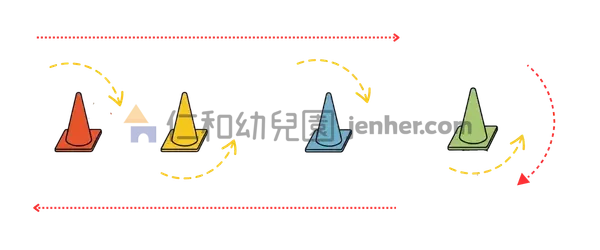
Equipment: 2 tall traffic cones, floor divider tape
Setup: 20-ft runway divided into outgoing (left) and incoming (right) lanes with 6 ft turning radius.
Safety: Keep lanes clearly separated to prevent head-on collisions at the turnaround point.
Make It Easier: Jog or briskly walk the loop course to understand the one-way flow before sprinting.
Make It Harder: Decelerate with low center of gravity around the cone, then burst into full sprint on the return.
Teacher Cue: "Sprint out on the left, loop smooth around the cone, and zoom back home on the right!"
Activity matrix-4: Continuous Obstacle Stepping Runway

Continuous Obstacle Stepping Runway

Navigate a continuous 4-station circuit combining crawling, low stepping hurdles, and balance beam crossings with smooth flow.

Teacher Notes: Setup, Safety & Variations
Equipment: Low foam hurdles (e.g., 4–6 in), 1 balance beam, crawl tunnel, floor markers
Setup: Circuit layout around the perimeter of the room with enough space between stations to avoid crowding.
Safety: Stagger starts to give children enough space to avoid crowding during station transitions, adapted to the room layout and group size.
Make It Easier: Walk around higher hurdles or step over ground-level lines first.
Make It Harder: Complete the circuit while carrying a small beanbag balanced on the palm.
Teacher Cue: "Keep your space bubble, step high over logs, and glide across the bridge!"
Activity matrix-5: Ultra Slow-Motion Freeze Walk

Ultra Slow-Motion Freeze Walk

Advance in dramatic slow motion, holding a high single-leg balance for 2 full seconds on each stride without wobbling.

Teacher Notes: Setup, Safety & Variations
Equipment: None required (barefoot or grip socks)
Setup: Open rug or gym floor with enough personal space around each child to move comfortably.
Safety: Provide enough personal space between children so balance wobbles do not bump peers.
Make It Easier: Hold single-leg balance for 1 count with arms outstretched sideways.
Make It Harder: Hold single-leg lift for 3 full seconds with hands placed firmly on hips.
Teacher Cue: "Turn on slow-motion mode: lift your knee high, freeze like a statue, and step down softly!"
Activity matrix-6: Sole-to-Sole Rowboat Counter-Balance

Sole-to-Sole Rowboat Counter-Balance

Sit facing a partner with feet braced sole-to-sole, join hands firmly, and alternate leaning forward and backward in a smooth rowing rhythm.

Teacher Notes: Setup, Safety & Variations
Equipment: Foam tumbling mats
Setup: Partner pairs seated on individual mats facing each other.
Safety: Keep a secure, comfortable grip within a controlled range; never release hands suddenly while rocking.
Make It Easier: Perform small gentle rocking motions with slightly bent knees.
Make It Harder: Lean back slightly further within a small, controlled range while maintaining a steady grip and smooth rhythm.
Teacher Cue: "Glue feet together, hold hands tight, and row our little boat over the blue ocean!"
Activity matrix-7: Foam Pencil Log Roll

Foam Pencil Log Roll

Lie flat on back with arms extended overhead and legs glued straight, rolling sideways across the mat like a rolling wooden pencil.

Teacher Notes: Setup, Safety & Variations
Equipment: Padded gymnastics mats (at least 6x10 ft)
Setup: Dedicated rolling station with clear boundary buffers to keep rolling in a straight line.
Safety: Keep arms resting comfortably by the ears or crossed over the chest for smooth, controlled rolling.
Make It Easier: Roll with arms crossed over the chest if overhead extension feels challenging.
Make It Harder: Roll 3 full rotations in one direction, pause for a breath, and roll 3 rotations back.
Teacher Cue: "Make your body long and straight like a wooden pencil, and roll smoothly across the paper!"
Activity matrix-8: Low Bridge Mountain Tunnel Hold

Low Bridge Mountain Tunnel Hold

Hold a strong four-point quadruped arch with hips elevated high, maintaining steady isometric posture as a partner crawls underneath.

Teacher Notes: Setup, Safety & Variations
Equipment: Gymnastics mats or carpet tiles
Setup: Paired stations on floor mats with 5 ft clearance between partner sets.
Safety: The bridge child must hold the arch firmly until the partner has fully exited to avoid collapsing on them.
Make It Easier: Form the bridge on hands and knees (tabletop pose) rather than full downward dog.
Make It Harder: Hold the high arch for 8 seconds while two partners crawl through in succession.
Teacher Cue: "Push the floor away with strong hands and feet—make a high bridge for the train!"
Activity matrix-9: Chest Pass & Step-Back Trapping

Chest Pass & Step-Back Trapping

Push a soft vinyl playground ball from chest level to your partner, then step forward to catch with two hands and cushion against your body.

Teacher Notes: Setup, Safety & Variations
Equipment: 1 8-inch soft vinyl or foam playground ball per pair
Setup: Partner pairs face each other along floor lines at an adaptable distance (for example, 6–8 ft).
Safety: Use lightweight foam or vinyl balls and adjust partner distance to reduce the risk of missed catches and keep play comfortable.
Make It Easier: Roll the ball back and forth along the floor or practice at a 4-ft distance with a bounce pass.
Make It Harder: Take one step backward after every 3 successful catches to gradually expand passing distance.
Teacher Cue: "Push from the chest with two thumbs down, and reach out to hug the ball softly!"
Activity matrix-10: Instep Pass & Controlled Foot Trap

Instep Pass & Controlled Foot Trap

Gently pass the ball along the floor using the inside of your foot, while your partner cushions and stops the rolling ball with the inside of their shoe or traps a stationary ball without stepping with body weight on top of a moving ball.

Teacher Notes: Setup, Safety & Variations
Equipment: 1 soft indoor soccer ball or foam ball per pair, 4 marker cones
Setup: 8-ft passing lane with 2-ft cone goal gates for targeting accuracy.
Safety: Keep kicks low along the floor. Stop rolling balls with the inside of the foot; never step with body weight onto a moving ball.
Make It Easier: Practice stopping a stationary ball with the inside of the foot before attempting rolling passes.
Make It Harder: Receive the ball with the inside of the right foot and pass back with the inside of the left foot.
Teacher Cue: "Pass gently with the inside of your shoe, and cushion the ball softly beside your foot!"
Activity matrix-11: Floating Balloon Rhythm Tap

Floating Balloon Rhythm Tap

Keep a lightweight inflated balloon floating in the air by tapping upward alternately with your left hand, right hand, or forearms.

Teacher Notes: Setup, Safety & Variations
Equipment: 1 standard round balloon (adult-inflated; latex-screened) or cloth-covered balloon / lightweight foam ball
Setup: Open indoor area with high ceiling clearance away from overhead fans or light fixtures.
Safety: Adults inflate all balloons. Keep uninflated balloons and popped fragments strictly out of children's reach. Stop play immediately to discard broken pieces. Never put balloons in mouths. Prohibit head contact; use gentle open-hand and forearm taps.
Make It Easier: Tap the balloon upward with two open hands together while seated on the floor.
Make It Harder: Alternate hands on every tap (left, right, left, right) while remaining in your own personal space.
Teacher Cue: "Gentle upward tap with open hands—keep your eyes on the balloon and let it float like a cloud!"
Activity matrix-12: Parachute Wave & Mushroom Dome

Parachute Wave & Mushroom Dome

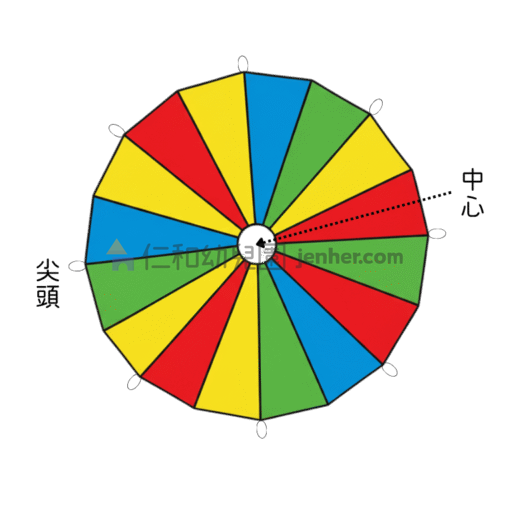
Hold the perimeter handles with two hands, ripple gentle waves on the adult's cue, and lift overhead together to make a gentle dome while keeping the space underneath clear and open.

Teacher Notes: Setup, Safety & Variations
Equipment: Commercial play parachute sized to manufacturer guidelines with secure perimeter handles
Setup: Spacious gym or grassy lawn with children evenly spaced around the circle according to the canopy diameter.
Safety: Follow manufacturer group capacity limits. Never trap children under the canopy, pull fabric tight over children, or enclose children without an adult exit signal.
Make It Easier: Hold handles at waist level and practice creating small and large gentle waves without walking inward.
Make It Harder: On the upward lift, take one synchronized step toward the center while keeping the canopy elevated high and exit paths clear.
Teacher Cue: "Grip with two hands, count one-two-three, lift to the sky, and keep our mushroom roof high and open!"
Frequently Asked Questions

Motor Skill Planning & ECE Framework FAQ

Guidance on reading the historical matrix, adapting activities, and connecting the collection with modern ECE planning frameworks.

How can educators use this matrix to plan preschool movement activities?
Use the matrix as a planning and browsing tool, not as a developmental assessment. Choose a movement focus, then compare chapters that offer different kinds of practice. A balanced lesson might combine locomotor movement, object play, balance, and cooperative routines while still adapting each activity to the children in front of you.
What are common ways to organize gross motor skills in early childhood?
A useful modern teaching framework groups movement into locomotor skills (such as walking, running, jumping, hopping, and galloping), stability or non-locomotor skills (such as balancing, bending, turning, and rolling), and object-control skills (such as rolling, throwing, catching, kicking, and striking). The eight-column matrix on this page comes from the original 500 Movement Games framework and should not be read as a universal U.S. taxonomy.
How can movement games provide practice related to executive function?
Movement games can give children concrete opportunities to practice working memory (remembering a simple rule or sequence), inhibitory control (stopping on a cue), and cognitive flexibility (changing direction, role, or movement when the rule changes). These are practice opportunities rather than claims that a specific game directly changes a particular brain region.
How can teachers adapt these activities for mixed-age or mixed-ability groups?
Adjust the task rather than assuming age alone determines difficulty. Useful changes include a larger target, shorter distance, slower speed, wider pathway, stable two-foot stance, fewer rules, or adult modeling. Add complexity only after the child can complete the simpler version with comfort and control.
How do these activities connect with Head Start ELOF and NAEYC developmentally appropriate practice?

Many activities can provide practice related to Head Start ELOF P-PMP 1 and P-PMP 2, which address large-muscle control and perceptual-motor use. NAEYC Developmentally Appropriate Practice is best used here as a planning lens: teachers consider individual development, strengths, culture, context, play, and child choice rather than treating one activity as fulfilling a fixed NAEYC motor standard.
ADVERTISEMENT