
Chapter 1
Rock-Paper-Scissors Games
Fast-paced rock-paper-scissors jumps, body-shape challenges, and reaction tag games to practice quick reaction and decision-making.

A growing English archive of gross motor and physical movement activities for children ages 1–6. Browse the illustrated chapters and teacher guides available now; additional activities and motor development theory chapters are being localized for future publication.
Featuring 24 categories of gross motor activities across balls, hoops, jump ropes, parachutes, vaulting boxes, tires, gymnastics mats, and no-equipment games. Click any card to explore illustrated activities and developmental teacher notes:
Fast-paced rock-paper-scissors jumps, body-shape challenges, and reaction tag games to practice quick reaction and decision-making.

Floor-level balance, crawling tunnels, partner timing, and supported movement play for preschool children and caregivers, emphasizing choice, comfort, and no-touch alternatives.

Rainbow waves, snake spirals, circles, and chase games with colorful ribbons to practice arm swinging, wrist movement, and spatial rhythm.

28 progressive ball skills: rolling, bouncing, underhand tossing, partner passing, and soccer kicking to practice hand-eye and eye-foot coordination.

Ground snake jumping, river crossing, partner turning, and independent single-rope jumping to practice jumping rhythm and landing control.

58 low-prep newspaper activities: balance pathways, turtle crawls, paper-ball rolling, toss targets, and one-way active lanes for preschool classrooms.

Step-over preparation, weight-bearing arm support, two-foot springboard takeoff, and controlled soft landings within professional apparatus and trained educator boundaries.

Floor-level tire stepping, rolling lanes, crawl paths, and outdoor gross motor exploration, clearly distinguishing loose tire play from professionally installed structures.

Forward walks, sideways stepping, obstacle straddles, slalom weaving, and hurdle jumps on modular low balance bars.

Long-distance straight walking, crab walks, kneeling crawls, seated balance holds, and cooperative partner passing on extended beams.

Log rolls, bear crawls, tuck rolls, bridge stretches, and human mat games to practice rolling, crawling, and floor movements on safety mats.

Grounded grip practice, supported hangs, body orientation, and floor-level preparation within professional horizontal bar apparatus boundaries and trained educator supervision.

Hoop rolling, hopscotch pathways, waist spins, arm twirls, and tunnel crawls to explore circular motion and jumping patterns.

Hand-supported bouncing, hand-clap jumps, turn jumps, and partner bounce timing for jumping rhythm and landing balance.

Upward balloon tapping, knee bumps, partner volleys, and fan-breeze chases for slow-flight tracking and gentle-touch practice in adult-supervised preschool settings.

Animal locomotion (bear, crab, frog, elephant), red-light green-light, balance freezes, and partner tag—zero gear, maximum physical fun.

Number gestures, shadow animal puppets, finger mazes, and rhythm claps combining precise finger movements and two-hand patterns.

Foot-operated step launcher games: self-launch and catch, target aiming, visual tracking, partner receiving, low-ball foot stops, and one-way active circuits.
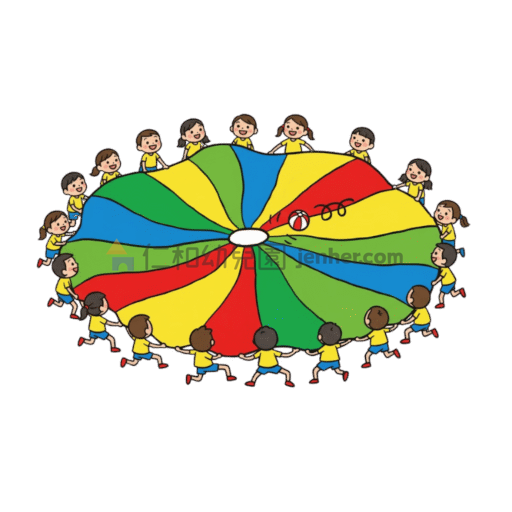
Gentle waves, mushroom dome inflating, flying fish ball bounces, and giant carousel walks—every child’s favorite whole-class cooperative activity.

Multi-station obstacle courses connecting crawling tunnels, balance beams, hurdle jumps, and beanbag throws for continuous aerobic engagement.

13 creative paper-prop games: pretend transformations, gentle circuit paths, paper-stick strikes, and cooperative target play using folded newspaper props.

10 wall rebound activities: low bowling rolls, straddle backward pushes, gentle wall taps, bounce-catches, and partner goal kicks using safe soft-foam gear.

8 floor rope distance jumping games: parallel rope rivers, wide straddle jumps, quadruped weight-bearing hops, V-shaped river jumps, and approach leaps.

Incline mat downhill rolling, mountain top crawls, team mat relay carries, and obstacle combos for advanced body control and gymnastics fun.
Two source-based observation resources covering six movement tasks and active-play safety responses:

6 educator observation prompts to notice and document how children approach jumping, balance walking, ball tracking, supported hangs, bat striking, and toe dexterity during familiar play.

9 informal educator observation prompts for noticing protective movement responses, visual evading, weight-bearing arm support, balance adjustments, and safe equipment habits.
Source chapters on sensory-motor experience, motor development, teaching principles, coordination, and active play:
The source chapter discusses regular active play, sedentary routines, open-ended materials, Scammon’s growth curves, and joyful whole-child movement.
Topics presented in the source chapter include cephalocaudal and proximodistal movement patterns, reflexes, and age-group observations from infancy to age 6.
Topics presented in the source chapter include balance, motor coordination (“調整力”), Flechsig’s historical cortical mapping, and multi-sensory physical play.
Play-based pedagogical methods: spontaneous use (Jersild), intrinsic motivation, concrete experience, meaningful practice (Thorndike), coaching cues, and socialization.
Core movement goals: expanding movement variety, practical safety knowledge, balanced physical control, opportunities to practice persistence and emotional self-regulation, and cooperative peer play.
Respecting each child’s emotional pace, avoiding rigid obedience drills, supporting hesitant children, and building authentic agency.
Sensory-motor problem solving: perception-action cycles, real-time spatial judgment, active listening, and responsive rule adaptation.
Mapping the collection across eight fundamental physical capacities to help teachers design balanced weekly gross motor physical play.
Classic hide-and-seek and tag play in Hong’s historical chapter: the Jenher chapter’s Montessori attribution, child-negotiated rules, spatial problem solving, and supervised safety.
Explore the source collection’s educational philosophy, illustrated reading system, publication background, and author:
The original 2002 preface on play-based movement, bodily grace, child initiative, and the inspirational role of joyful educator modeling.
The background of Founder Nanhai Hong’s 2002 curriculum archive, digital preservation, and North American ECE adaptation.
Practical orientation for early childhood educators on browsing chapters, understanding card structures, and adapting activities for individual readiness.
The athletic life of Founder Nanhai Hong, the origins of Jenher Preschool physical education, and academic references.

This curriculum originated from Nanhai Hong's years of practical early childhood physical education teaching. Jenher Preschool preserved the core activities, digitizing and updating the text, instructions, and safety guidelines for modern early childhood classroom needs.
This material is freely provided for classroom teaching and non-commercial research. When citing, please attribute "500 Preschool Movement Games" with a link to this webpage. Commercial resale or unauthorized mass reproduction is strictly prohibited.
Before starting, assess each child's readiness and ensure an open, slip-resistant play area with continuous adult supervision. For children with specific health, motor, or developmental considerations, please consult a pediatrician or pediatric physical therapist.